Anthropic just confirmed it is building an in-house silicon team to design the chips that run Claude, joining OpenAI in a race to stop leaning on Nvidia for every unit of capacity. The reason is boring and enormous: whoever controls the hardware controls the price and supply of the models everyone else builds on. This week also brought a browser made for agents instead of people, and two companies quietly turning models into revenue.
TELECOM
Circles wired a model into the phone plan itself

Circles builds the software other telcos run on, and it rebuilt its customer experience around the OpenAI API rather than a fixed menu of plans and prompts. Instead of a static app, offers, usage nudges and support responses are generated per customer from live account data. The engineering team also leaned on Codex to move faster, which is how a small team ships this kind of thing without a year of runway.
The reported results are a 22% lift in average revenue per user and a 9% drop in churn. Both figures assume the personalization is actually driving the behavior rather than riding a good quarter, and Circles published them itself, so read them as the vendor's own accounting. The mechanism is the part worth copying: the model sits between the customer and the billing system, not off to the side in a chat window.
the model sits between the customer and the billing system, not off to the side in a chat window
STUDY TOOLS
Notability turns a pile of notes into a study set
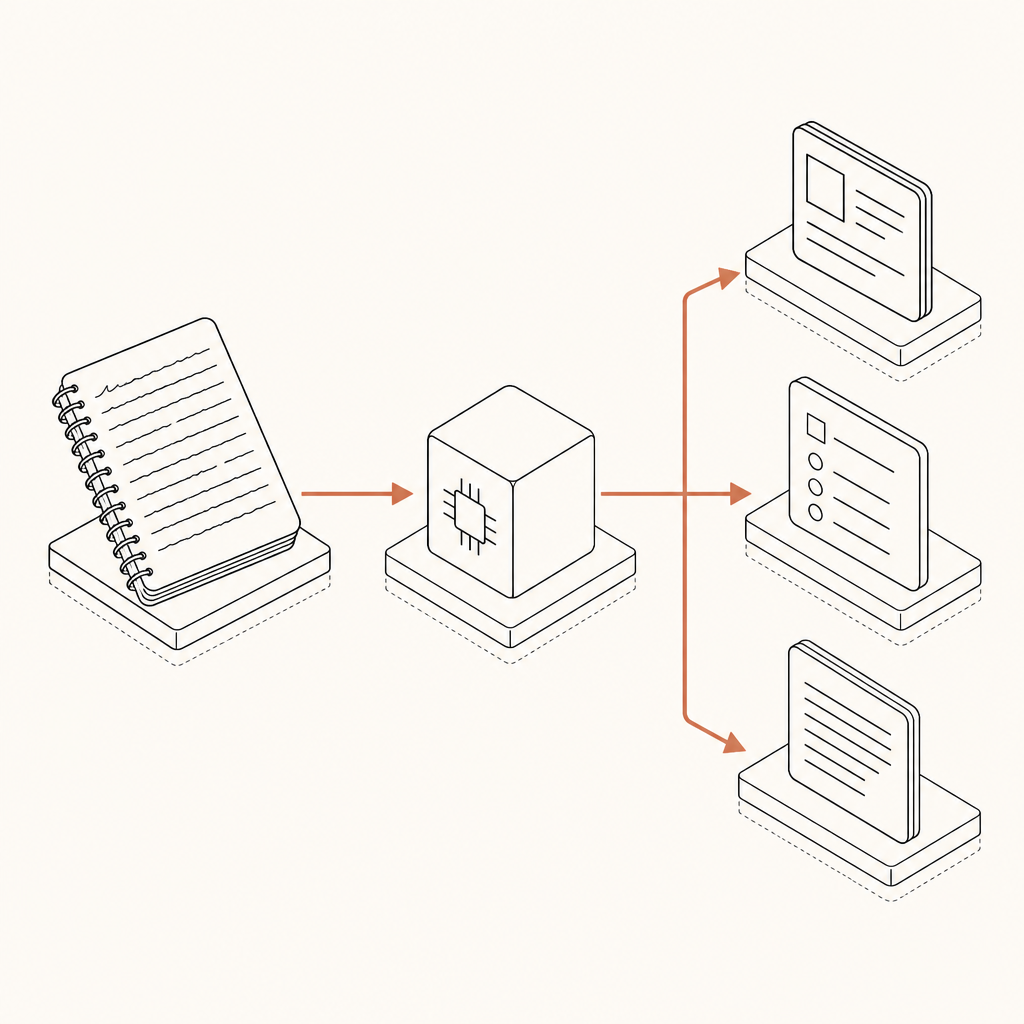
Notability took the raw material students already produce, their notes, and built a pipeline on the Claude Platform that converts them into flashcards, quizzes and summaries on demand. The work the app does is the tedious middle step every student skips: reading back through a semester of notes and turning it into something you can actually drill against. The model reads the notes and emits structured study material the app renders directly.
What makes this a product rather than a demo is that the generation is tied to the user's own content, so the output is specific to what they wrote rather than a generic explainer. It is a clean example of the pattern that works: point a model at data your users already trust, and have it produce the artifact they would otherwise never make by hand.
point a model at data your users already trust, and have it produce the artifact they would otherwise never make by hand
ANTHROPIC
Anthropic is going to build its own silicon
Anthropic confirmed it is standing up an in-house team to design custom chips for running Claude, a move Ars Technica frames as part of a race with OpenAI to scale capacity while cutting dependence on Nvidia. Designing your own silicon is one of the most expensive commitments a company can make, which is a signal about how much of the cost of an AI business is now the hardware bill rather than the research.
For anyone building on Claude, the consequence is downstream and slow but real: control over the chips is control over how much capacity exists and what it costs to rent. It does not change your bill this quarter. It changes who sets that bill over the next few years, and it makes Anthropic less hostage to a single supplier's allocation decisions.
control over the chips is control over how much capacity exists and what it costs to rent
TOOLS
Cloudflare built a browser for agents, not people

Cloudflare launched Kitesurf, a cloud-hosted browser designed to be driven by AI agents rather than displayed to a human. The pitch is efficiency: it uses less computing power than Chromium for common automation tasks, so developers building agents that click through websites, fill forms and scrape data can run them cheaper and more reliably.
Browser automation has been the messy underside of a lot of agent projects, because agents were piloting a browser built for eyeballs and mouse cursors. A browser built for the agent removes a layer of that friction. If you have ever wanted an agent to actually go do things on the open web instead of just talking about them, this is the plumbing that makes that less brittle.
Reply and tell me what you are trying to automate, and I will tell you plainly whether it is the kind of agent Openhour builds.
Free · every Friday
Get the weekly AI brief
Plain-English AI, in your inbox each week. One email, no spam.
No spam, ever. Unsubscribe with one click. Phone is optional and only used if you ask us to call.
Prefer the website? Subscribe at openhour.io →